
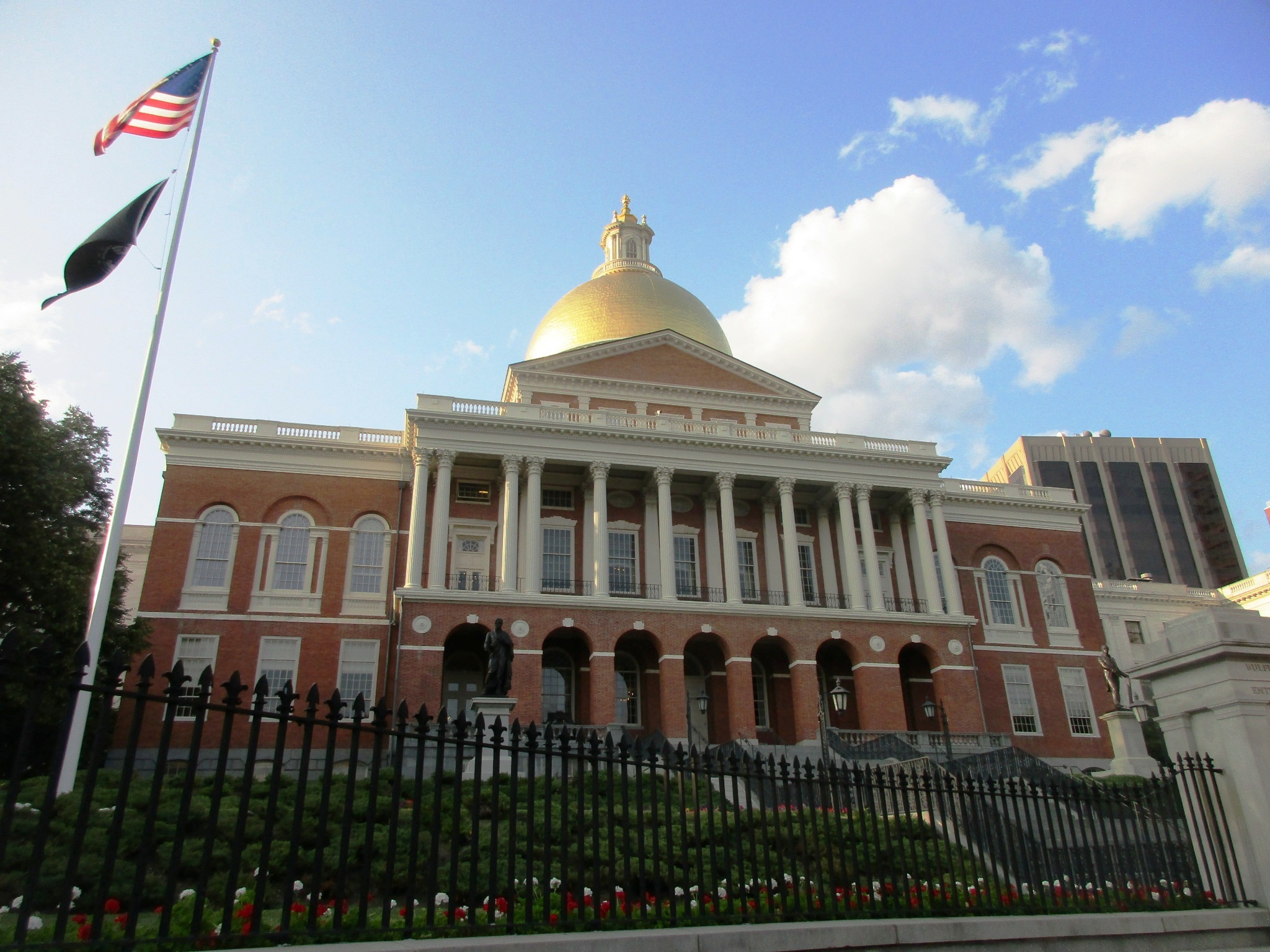
IMG_3093 Mann and Webster

-

- Photo of the plaster version of the statue from the artist’s scrapbook.

-
- “Kennedy served first in the [Massachusetts] House of Representatives and then in the Senate.
-

- (unveiled 1915), dedicated 1922) Anne Hutchinson by Cyrus Edwin Dallin

-
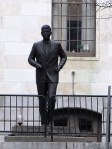
- With his arms bent and his gaze focused straight ahead, the figure appears to stride with a purpose in mind—perhaps his destination or the next task at hand.

-
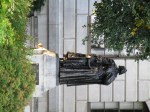
- John F. Kennedy by Isabel McIlvain
-

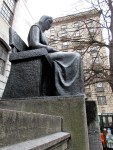
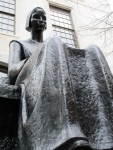
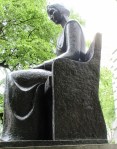
- Mary Dyer, a portrait of a woman martyred for her religious ideas in Puritan-ruled colonial Boston, and dating from the mid 1950s
-
- In subject matter her work reflected the Quaker values and pacifism she embraced by the 1940s, quietly commenting on events of her times.
-
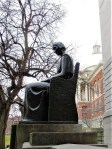
- is a subtle commentary for tolerance in the era of MacCarthyism and blacklisting in a time of rabid anti-Communist hysteria. “
-
- “[Shaw’s] work became more simplified and even abstracted, in tune with major trends in her field, though her work often was conservatively accessible. She followed new expressions in European art.

-
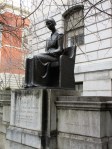
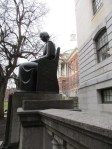
- Mary Dyer by Sylvia Shaw Judson

-
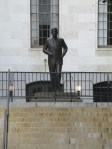
- This sculpture captures Kennedy’s youth and poise as he walks confidently out of the Massachusetts State House.
-
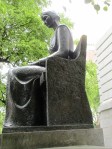
- The sculptor – herself a Quaker—has depicted Dyer in a reserved pose with no adornment. “
-

- Viewing sign-in station inside the State House.
-

- Governor John Winthrop repeatedly exiled Dyer from Massachusetts, but she returned to the colony nevertheless to visit imprisoned friends and protest her sentence.

-

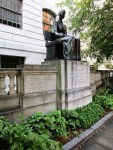
- He left the state Senate in 1837 to serve as the first Massachusetts Secretary of Education in 1837 and worked tirelessly to bolster public schools by increasing funding, promoting legislation, and improving training for teachers.

-
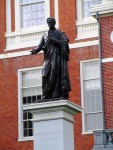
- “…Horace Mann was both an important politician and an influential thinker whose ideas about educational reform shaped the modern American public school system.


-
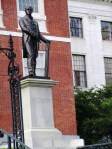
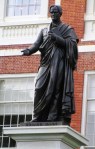
- Daniel Webster (1782 – 1852) by Hiram Powers (1805 –1873)
-
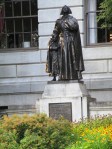
- Anne Hutchinson (1591-1643) by Cyrus Edwin Dallin (1861-1944)

-

- In 1660, she was hanged on the Boston Common for refusing to repent her supposedly heretical views.
-

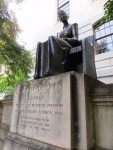
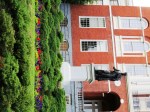
- Fence-restricted view of Horace Mann
-
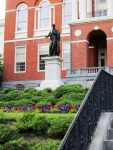
- Horace Mann byEmma Stebbins
-
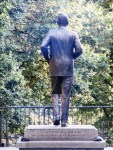
- On January 20, 1961, Kennedy became the youngest elected president of the United States, at age 43.”

-

- Mann ended his career in education as President of Antioch College in Ohio—one of the few institutions to accept African-American students at the time.”
-

- ” Dyer challenged traditional Puritanism with her progressive beliefs. Governor John Winthrop repeatedly exiled Dyer from Massachusetts, but she returned to the colony nevertheless to visit imprisoned friends and protest her sentence.

-

- Base below the feet of Mary Dyer
-
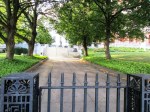
- Fence-restricted view of JFK

 Art Outdoors