
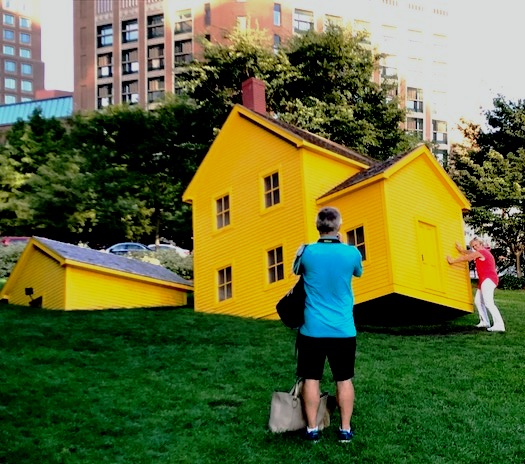
IMG_0637
-
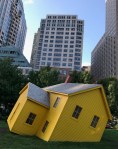
- and the larger house is inspired by the Pembroke Friends Meeting House, which is the oldest surviving Quaker meetinghouse in Massachusetts.
-

- “Traditional meeting houses became the community centers and had the defining characteristics of simplicity, equality, peace, and togetherness. …The Meeting House intends to mimic these ideals, highlighting the potential for civic structures to act as gathering points where passersby can explore, question and interact,..”
-
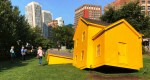
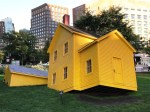
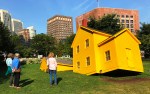
- The sculpture references two significant parts of New England history: the small house-like structure is a reminder of the thousands of displaced residents and demolished homes that resulted from the city’s elevated highway infrastructure project, and the larger house is inspired by the Pembroke Friends Meeting House, which is the oldest surviving Quaker meetinghouse in Massachusetts.
-
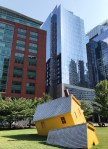
- The Meeting House takes inspiration from the simple architecture of the area’s first colonial settlers and was fabricated using traditional materials and techniques.
-

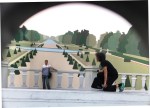
- What seems a believable space becomes implausible when a person walking from one side of the room to the other appears to grow or shrink.
-
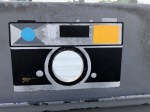
- To the naked eye, the sculpture looks like an off-kilter garden but when viewed from the viewfinder a few feet in front of the piece, the perfectly symmetrical garden frames the radically disproportional people within.
-
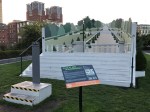
- “The garden imagery and sculpture title reference Alain Resnais’ 1961 film, Last Year at Marienbad. In the film, a woman’s fantasies and memories weave together opulent interiors and gardens into a seamless architectural labyrinth.”
-
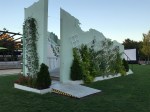
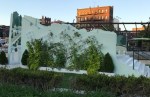
- Meredith James’ sculpture is an optical illusion called an Ames room – a three-walled trapezoidal room built with a false perspective.
-

- Wrapping the walls of the Ames room is a vertical plant installation, commonly referred to as a greenwall.


 Art Outdoors
That’s funny how the woman is pretending to hold the house up with her bare hands. Great picture!
LikeLike
Thanks! That was one of many ways people were inspired to interact with the odd angles of the structure.
LikeLike