
LOWELL SCHOOL PARK, near the intersection of Mount Auburn and Lowell Streets, Cambridge, MA
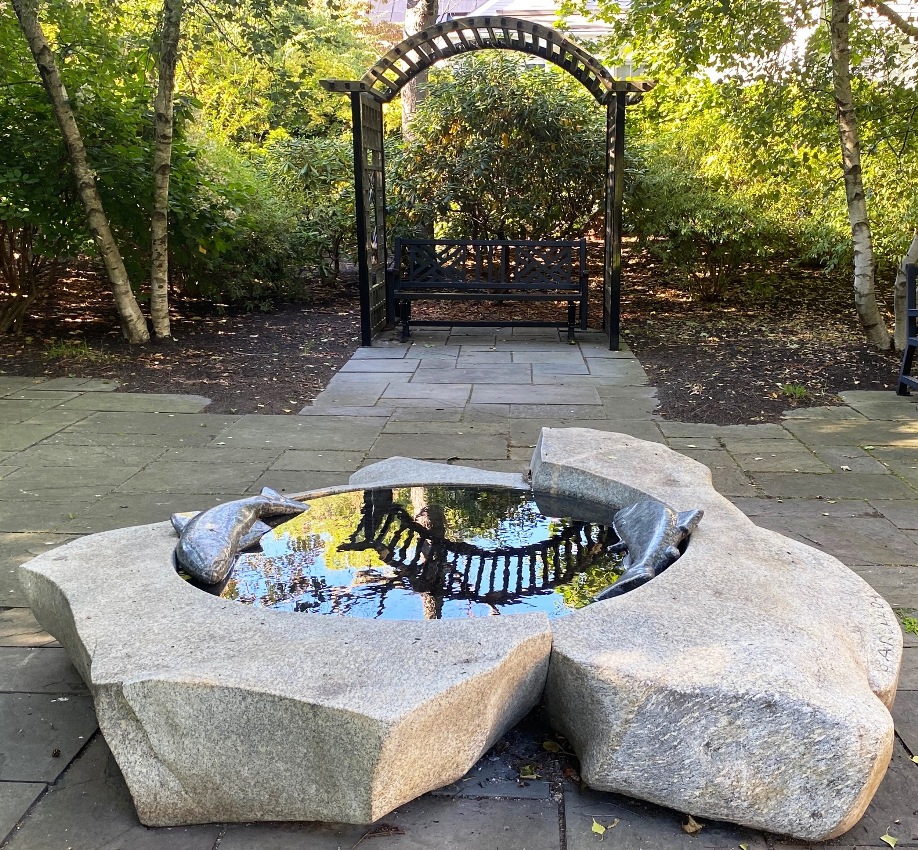
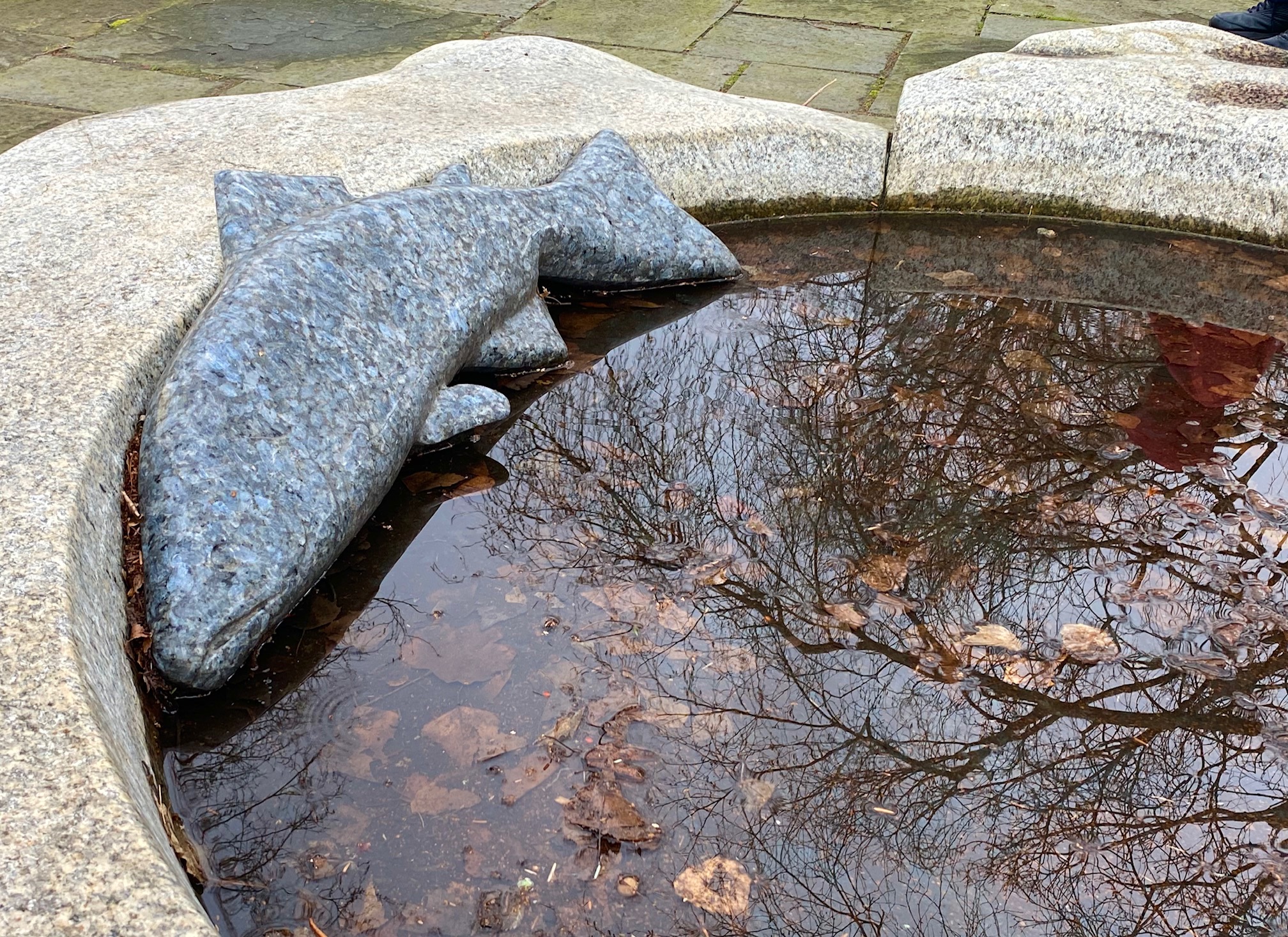
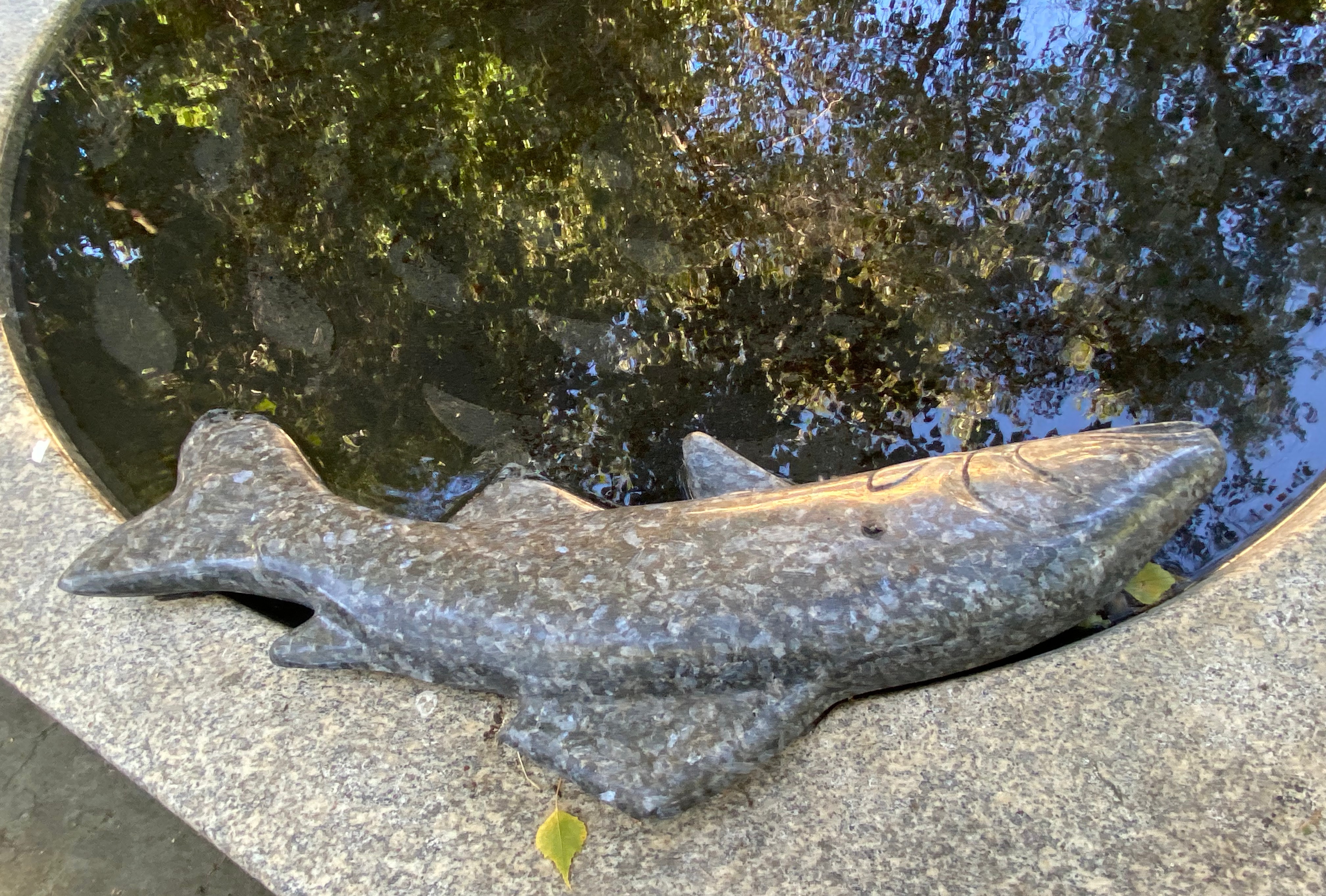
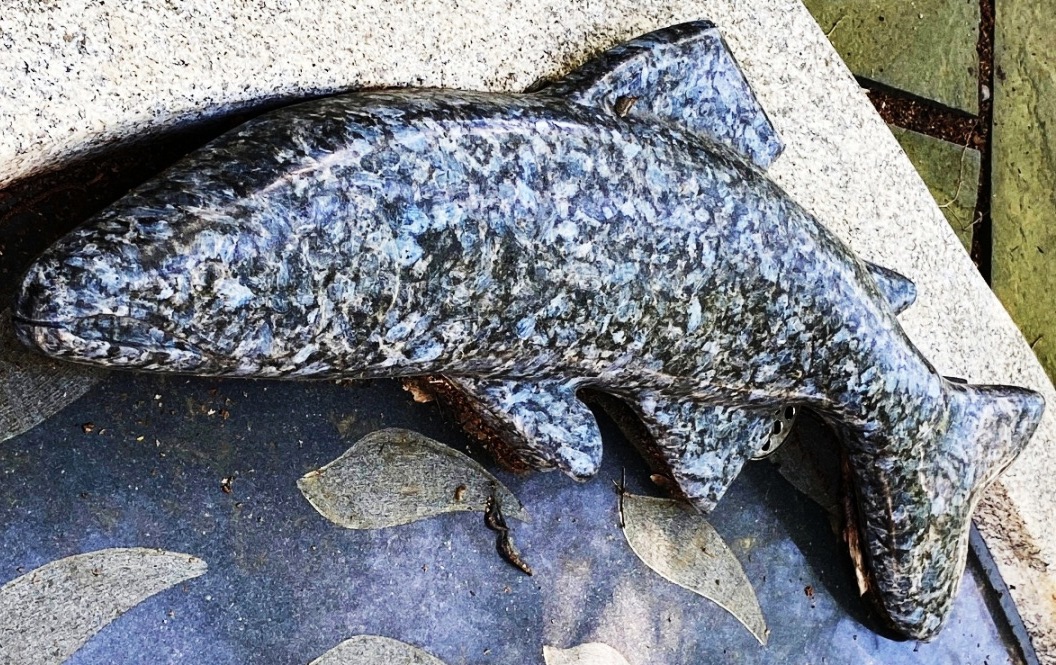
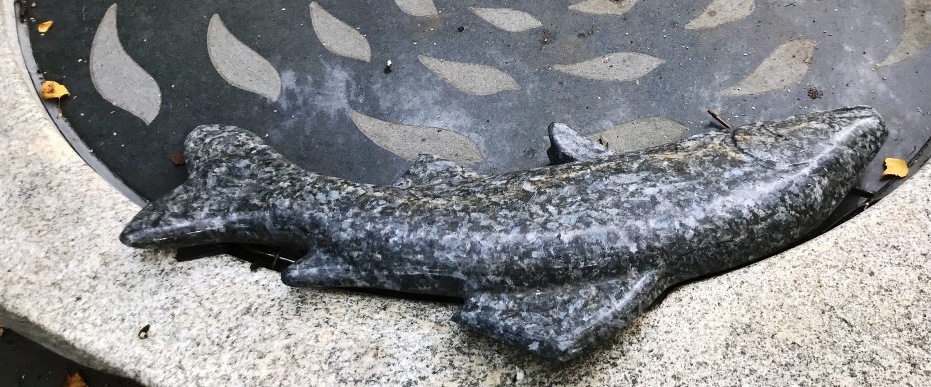
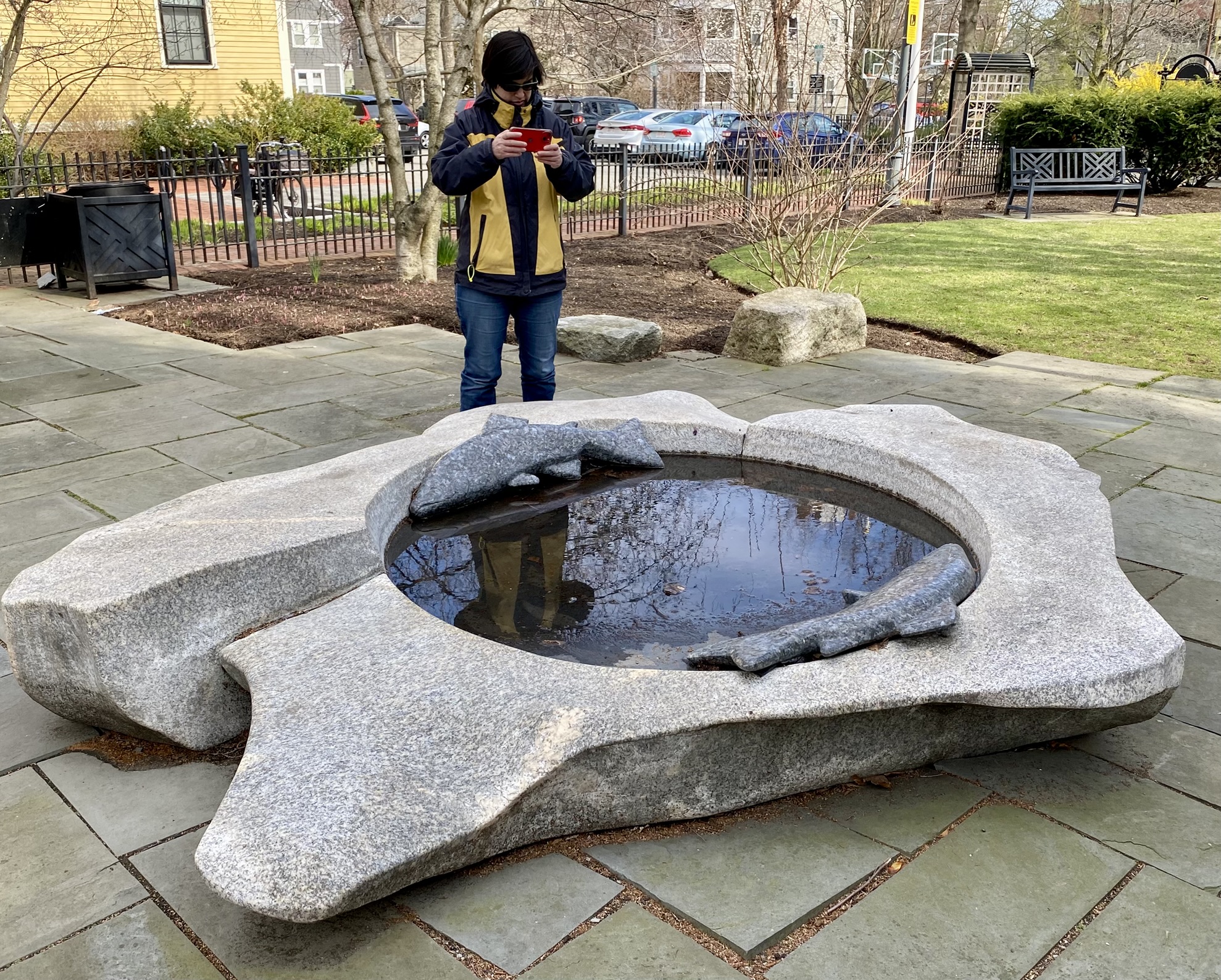
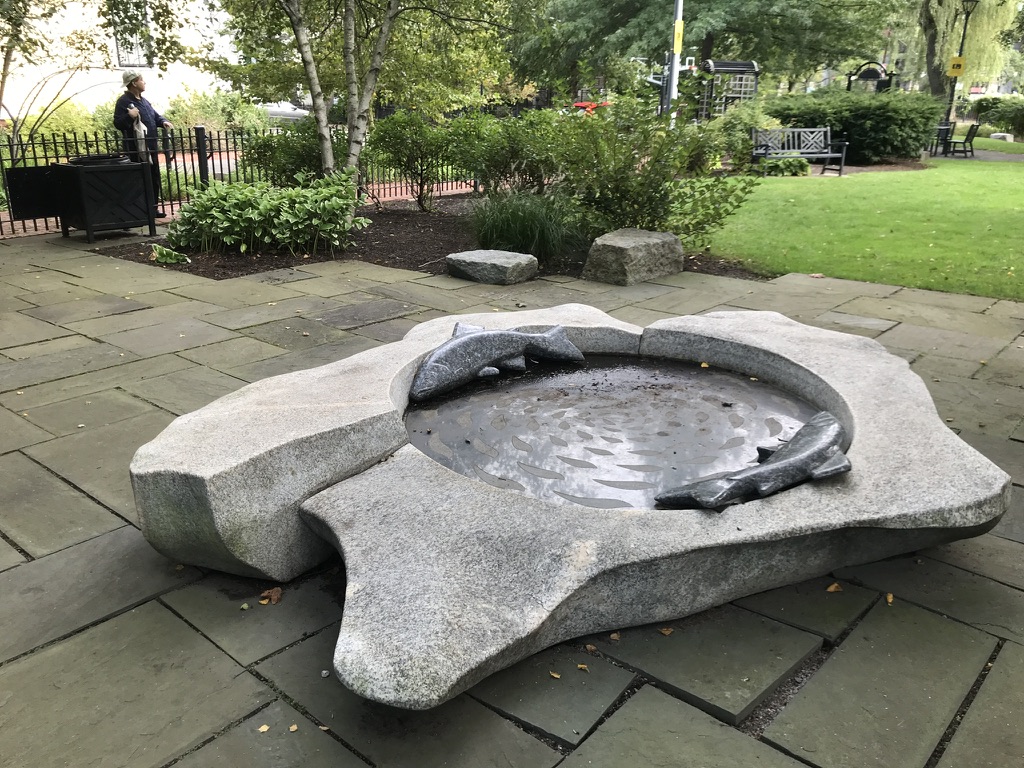
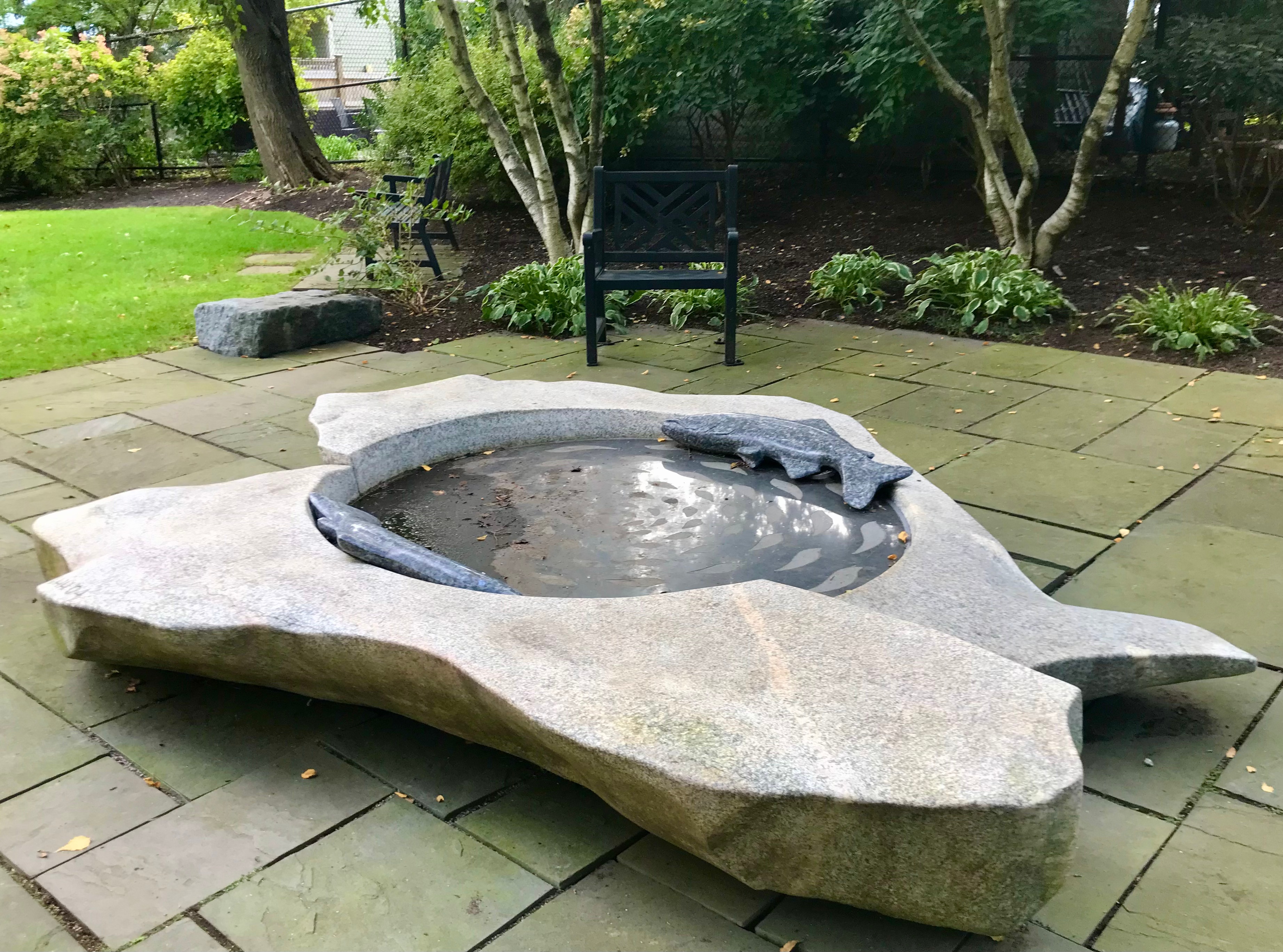
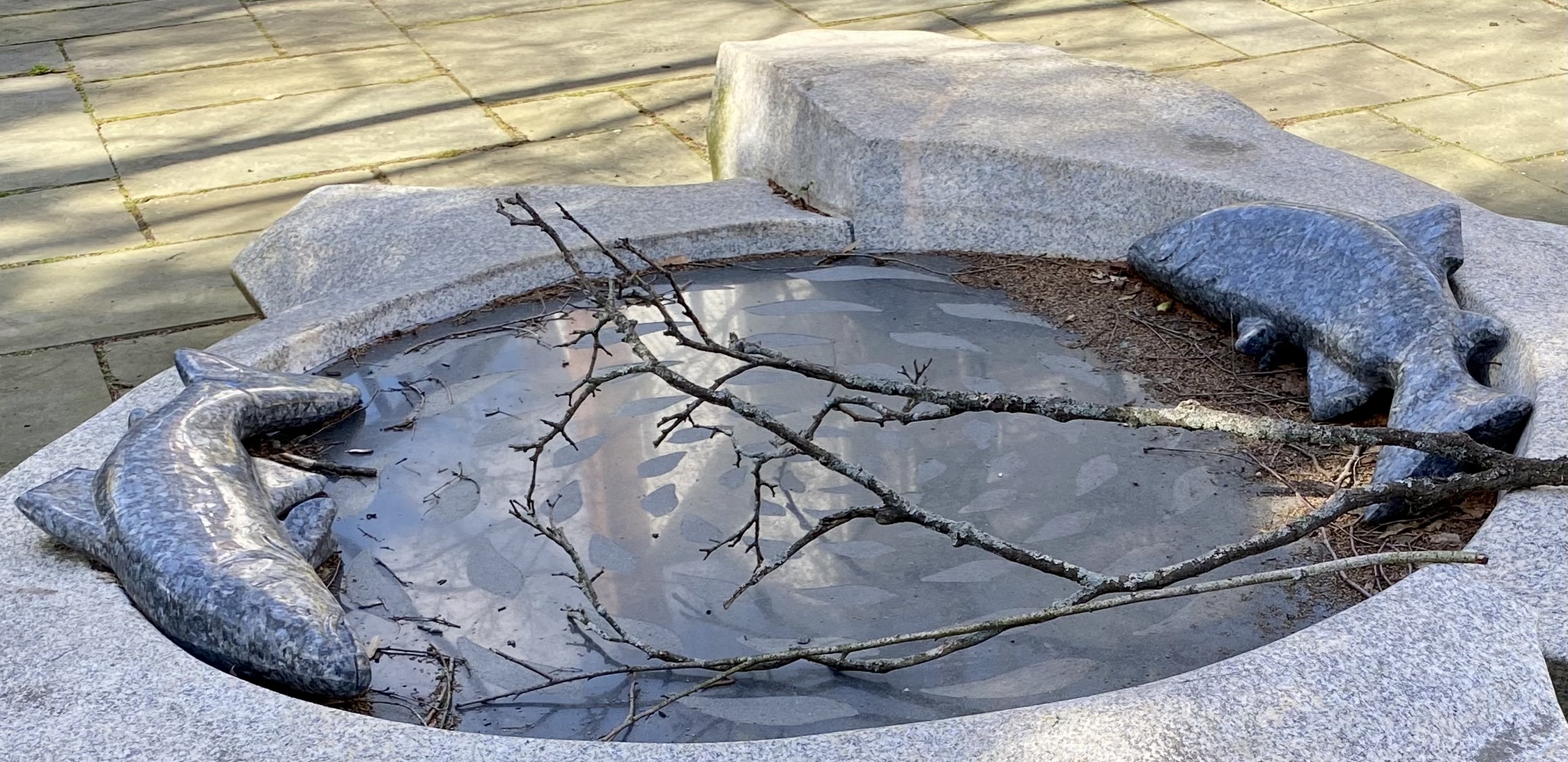
Today I want to share the sculpture Salmones Salari because it is still there. Created by Andreas von Huene for installation in Lowell School Park in 2004, the art has survived more than two decades and will likely last for many more.
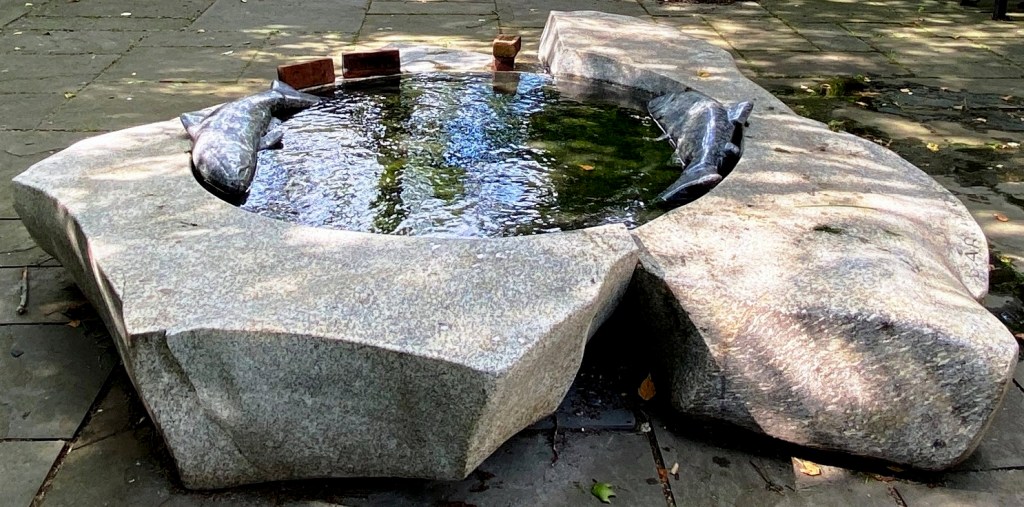
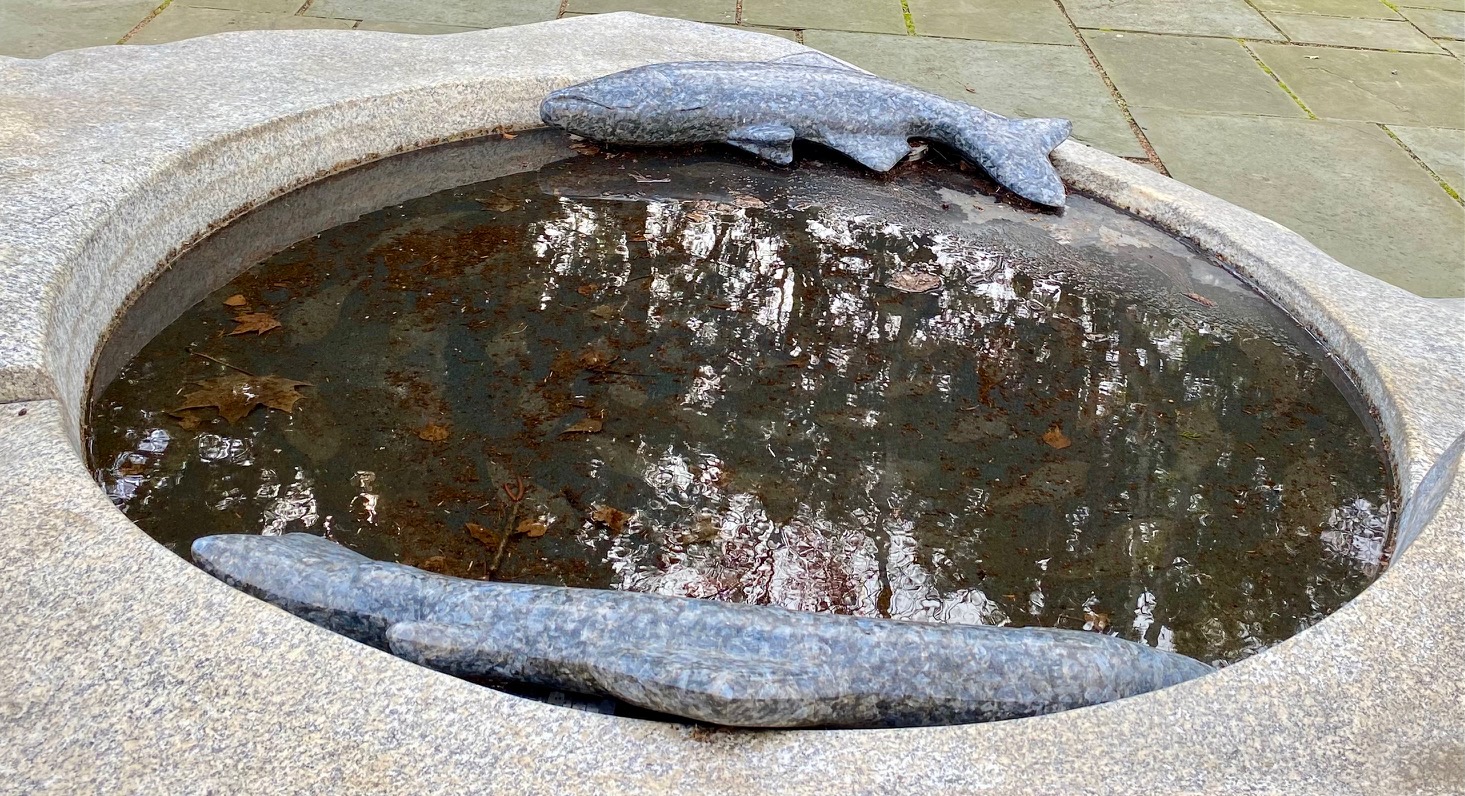
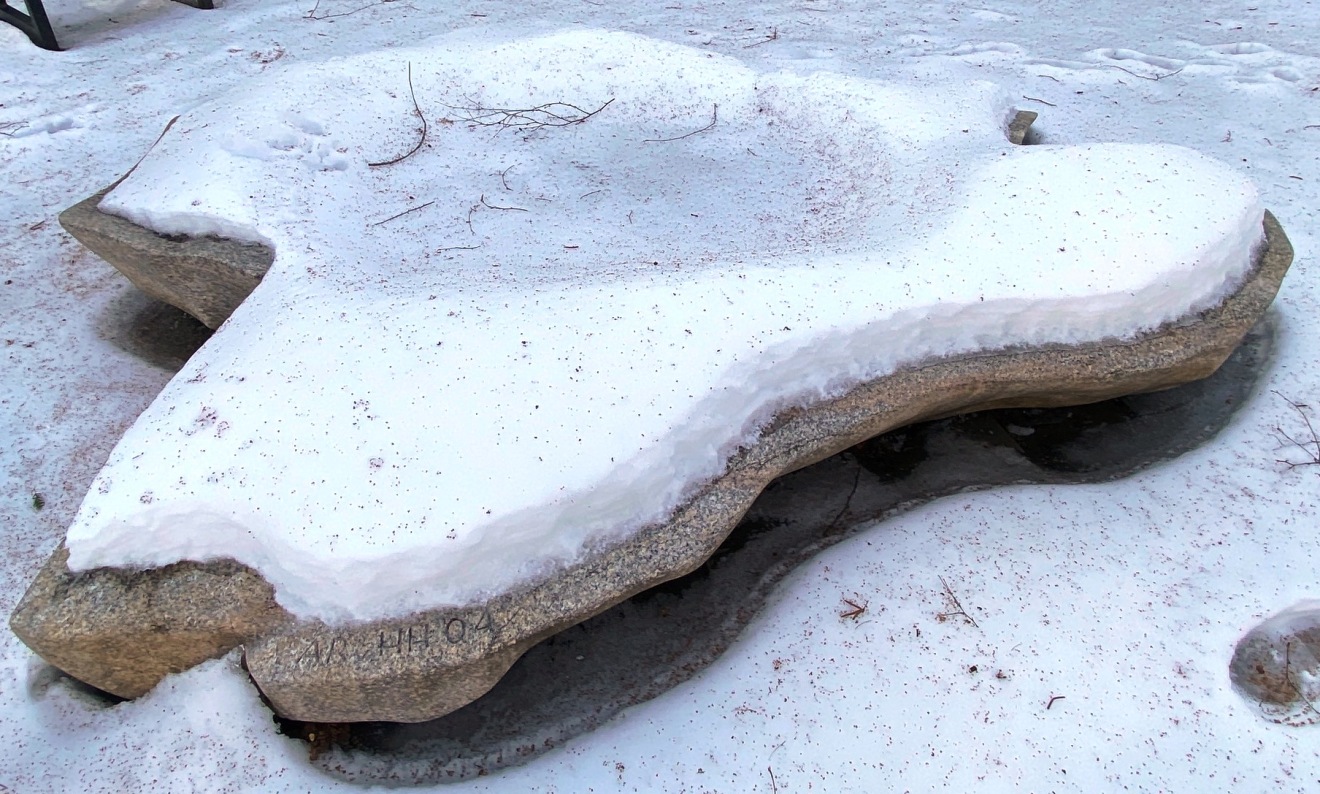
In contrast with the celebrated real-life Atlantic Salmon, who might only complete their own full lives in just one year, the two polished granite salmon persist within their pool. The sculpture seems stable, unlike the many exciting temporary artworks I often prioritize for posting because they will be gone within a year. Yet this artwork also goes through changes every year.
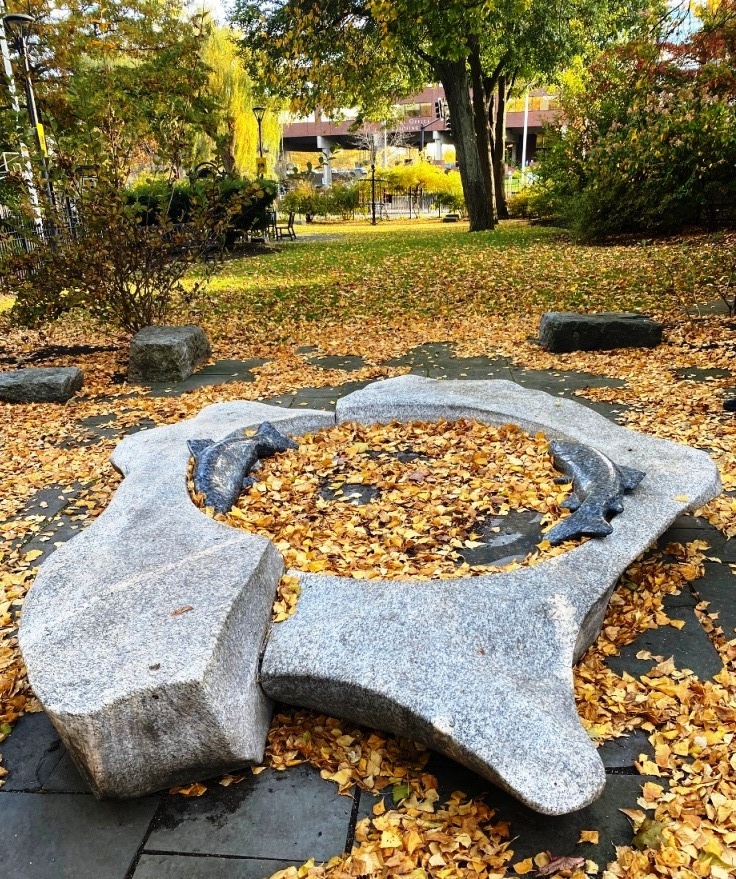
Links, quotes, and photos here might just begin to tell what could be learned about this one of more than 200 works of Public Art in Cambridge. The photos explore survival through changing seasons or weather around the site.
Granite Pool Encircles Salmon through the Seasons
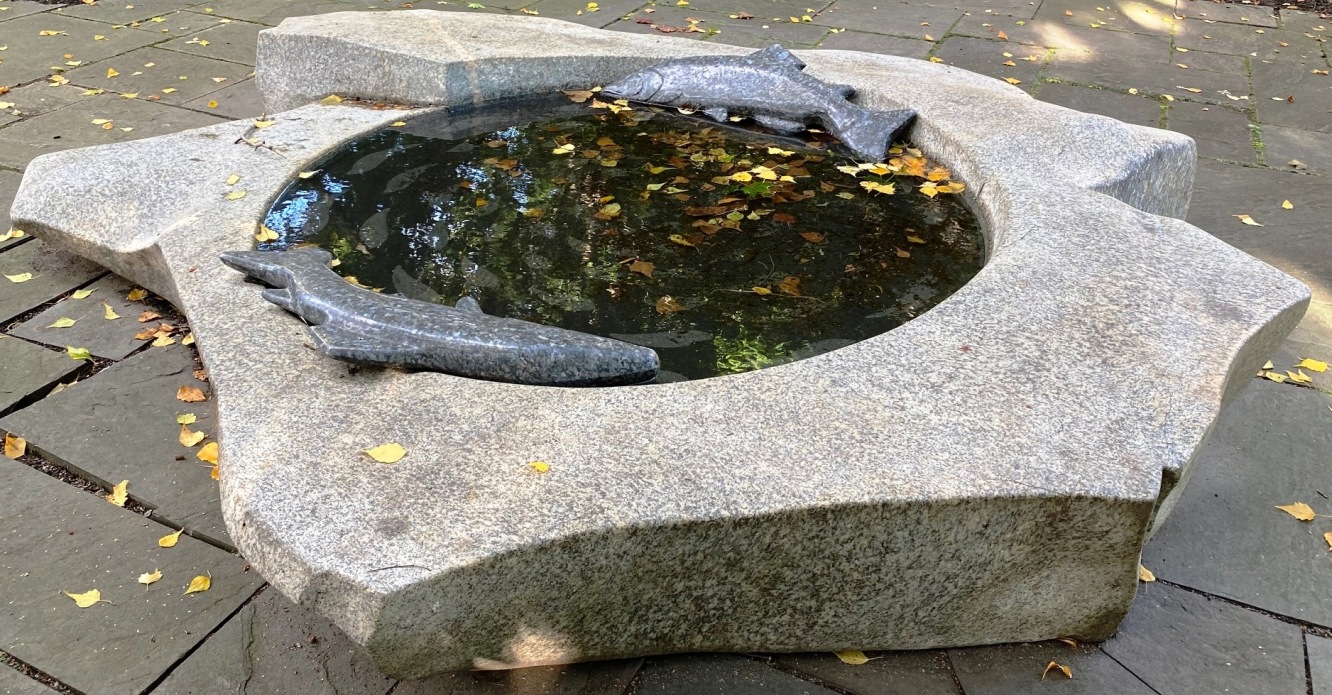
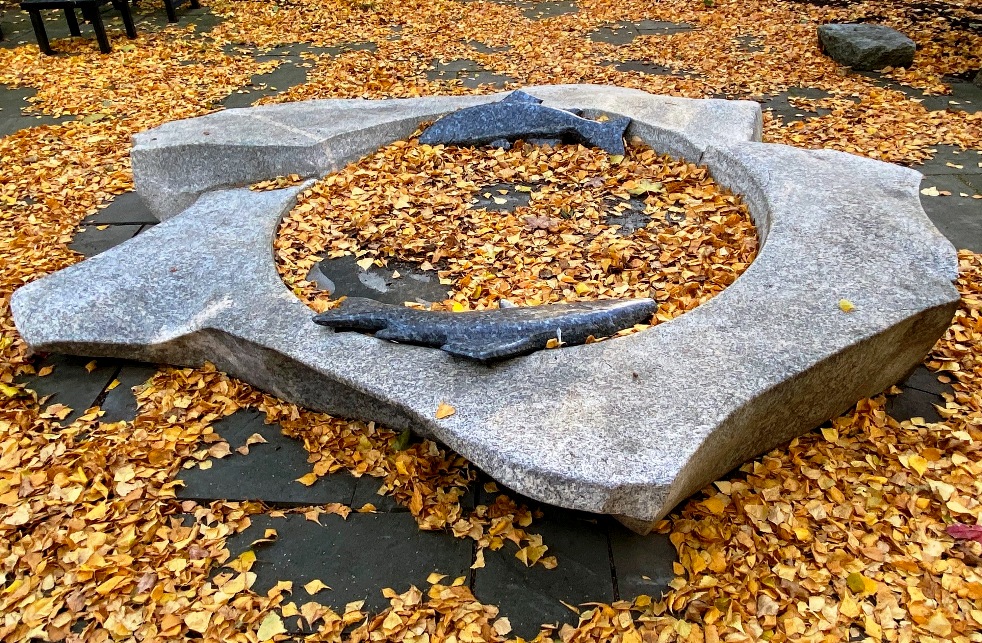
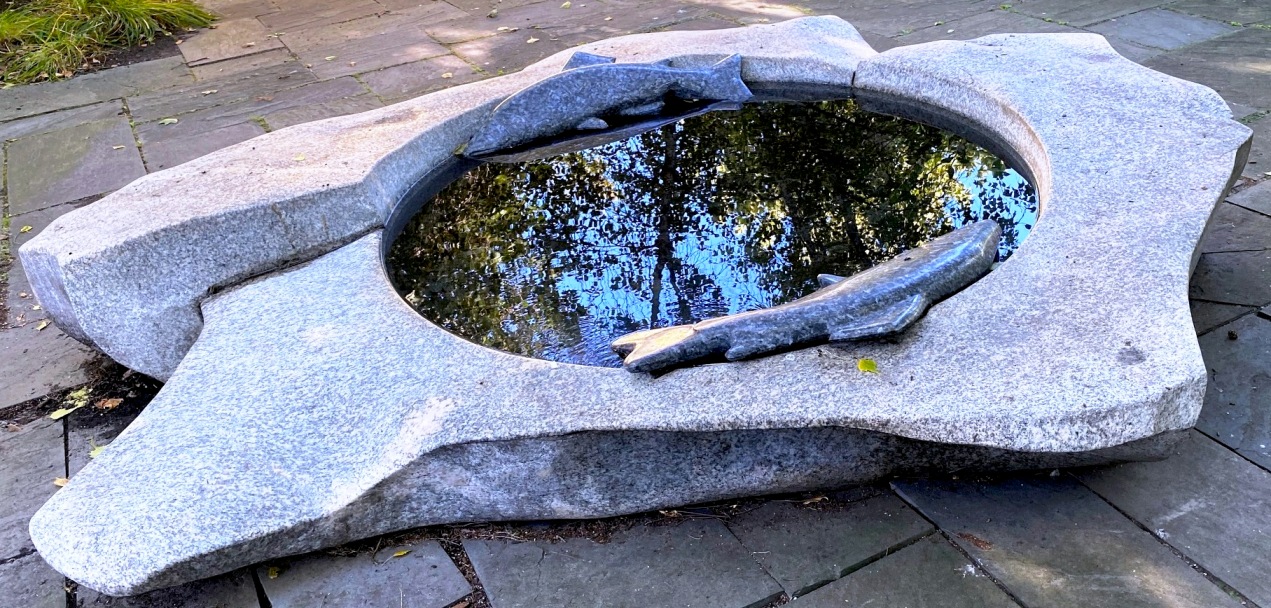
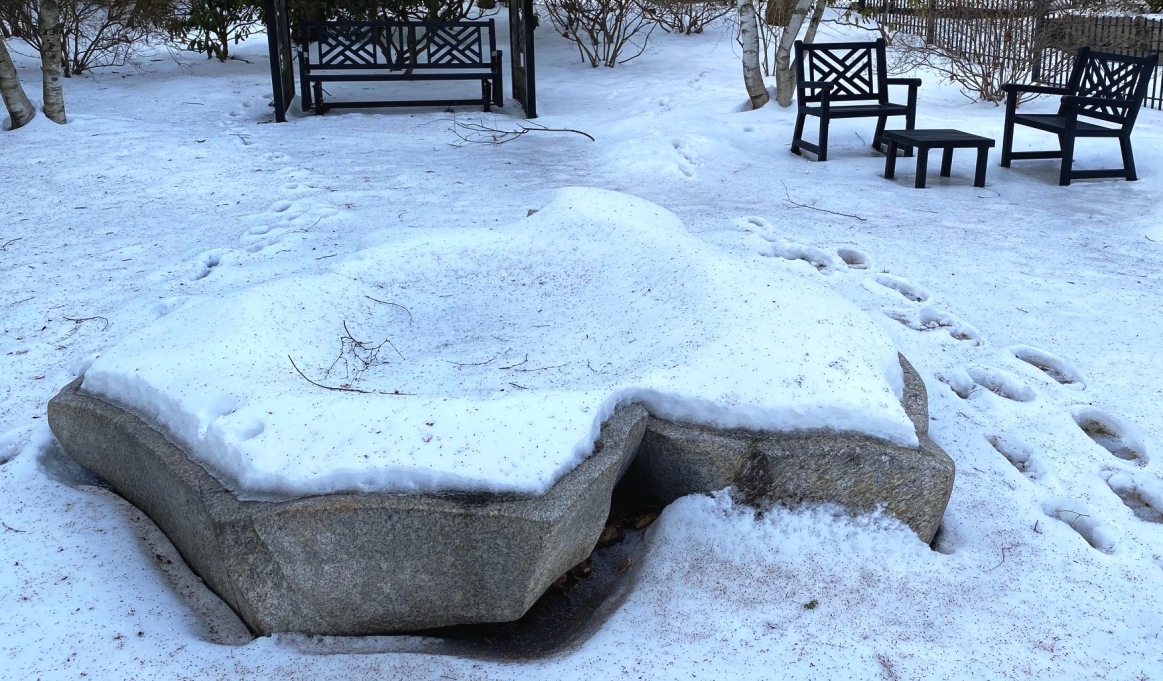
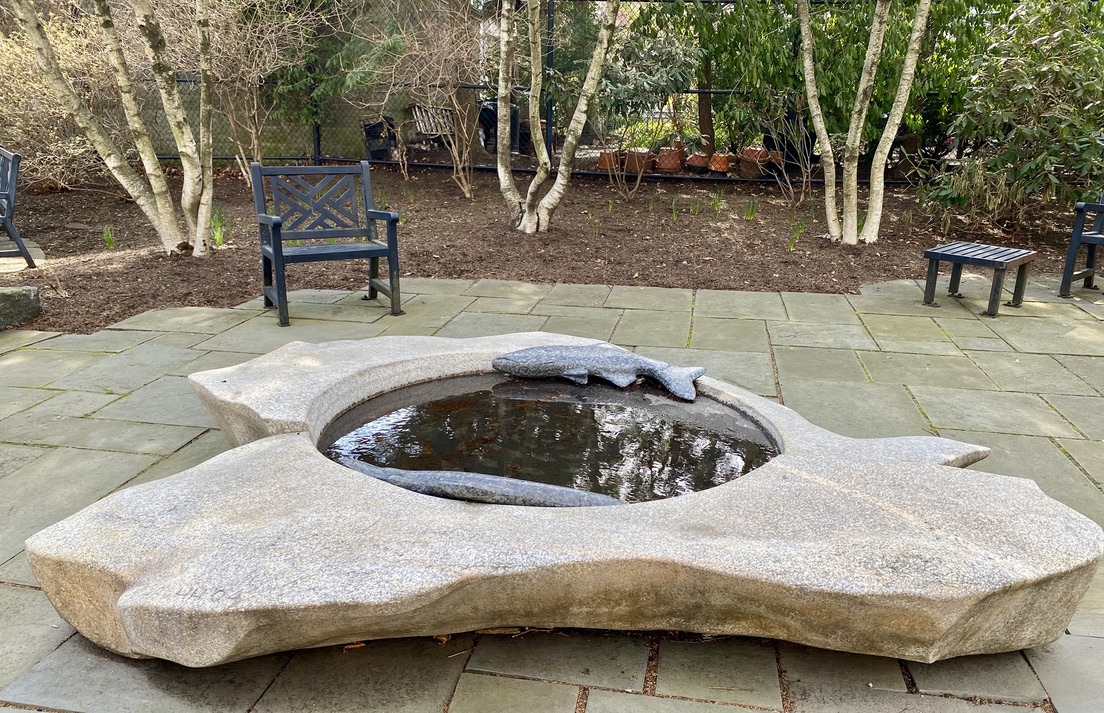
“Von Huene has created many artworks using water themes and animals such as these two cool granite salmon. At Lowell School Park he offers a contemplative, sculpted place to sit with a shallow pool of water in which to dip your fingers. One’s imagination just might be transported to a different place where the fresh water of a river meets the salt water of the ocean.” (quote from Public Art Cards Cambridge Arts: Salmones Salari)
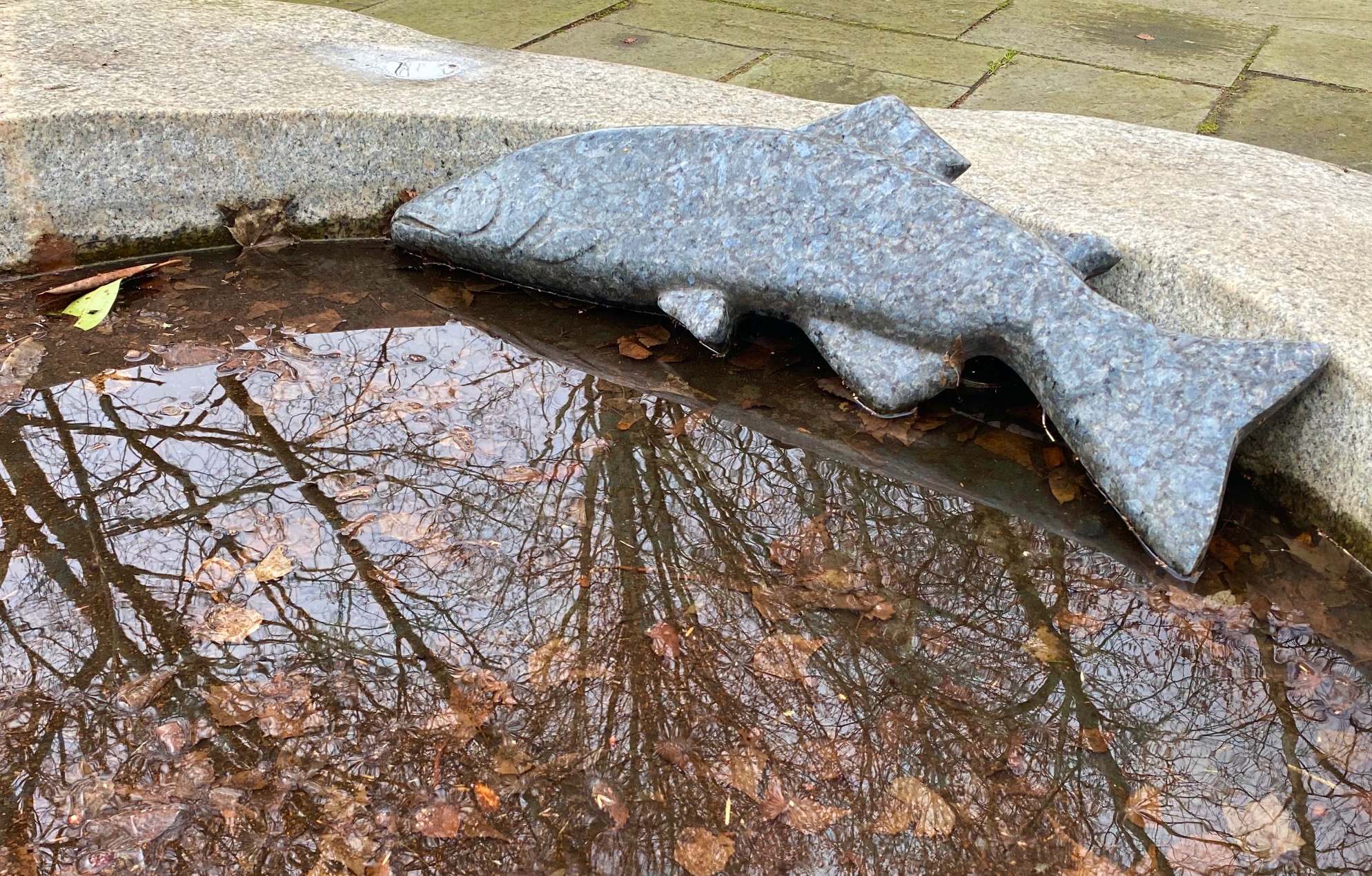
“Atlantic salmon are an anadromous migratory fish that begin their life in freshwater and migrate to the ocean to feed and grow, and then return to freshwater to spawn in rivers. The species name salar means the leaper. These fish are very fast swimmers and can jump very high – almost 12 feet!” (quote from Atlantic Salmon, U.S. Fish & Wildlife Service)
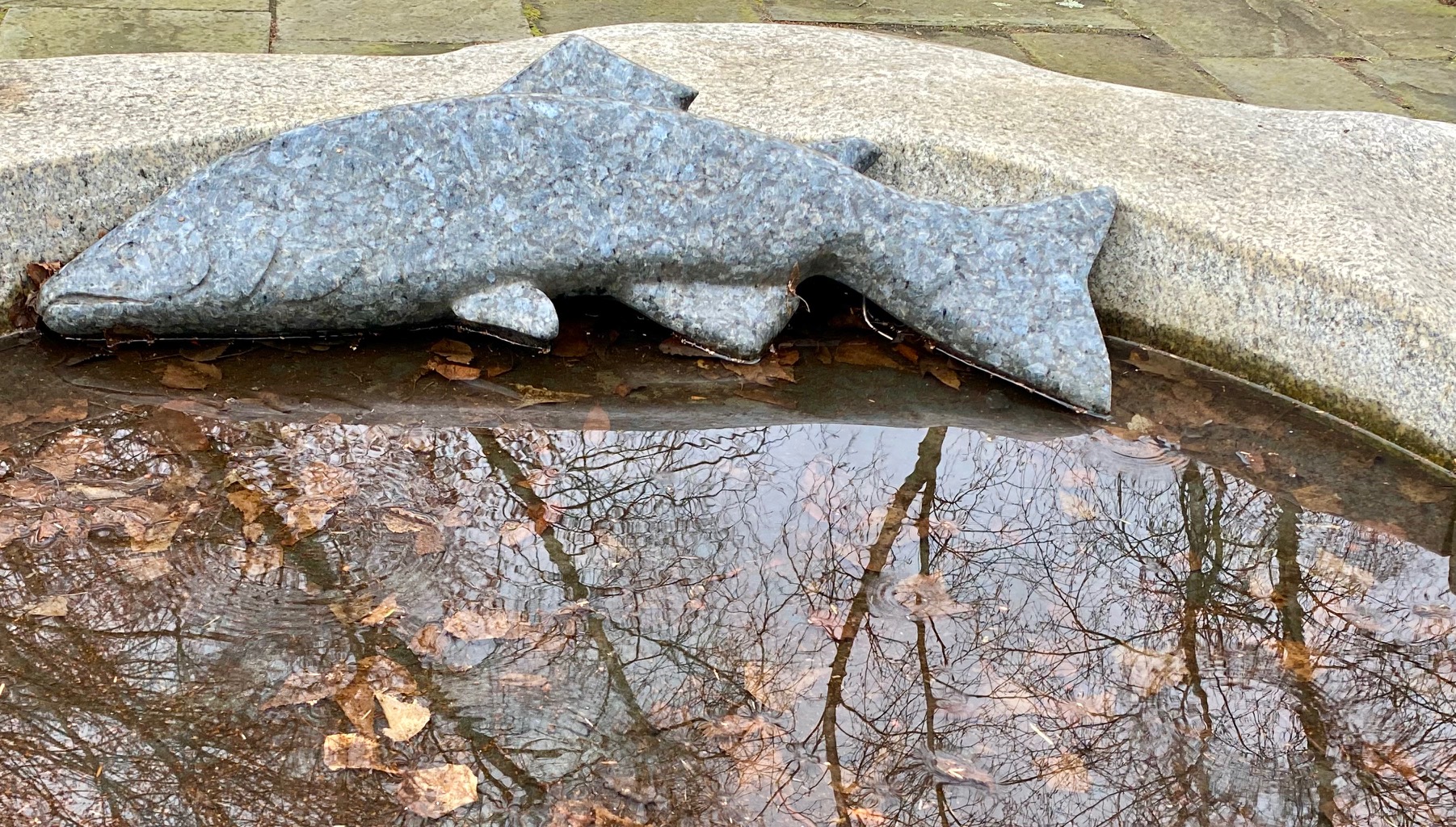
“Hundreds of thousands of Atlantic salmon used to migrate from the Atlantic Ocean to rivers in North America. As early as 1864, hatcheries began raising Atlantic salmon to supplement wild populations because of concerns over declining stocks due to overfishing and damming of rivers.” (quote from Atlantic Salmon, U.S. Fish & Wildlife Service)
“Unlike Pacific species of salmon, S. salar is iteroparous, which means it can survive spawning and return to sea to repeat the process again in another year with 5–10% returning to the sea to spawn again. Such individuals can grow to extremely large sizes, although they are rare.” ( quote from Atlantic Salmon’ Wikipedia.)
“Today, only small numbers return to Maine and eastern Canada. The Gulf of Maine Distinct Population Segment is currently listed as endangered under the Endangered Species Act, and Critical Habitat was designated in 2009.” (quote from Atlantic Salmon, U.S. Fish & Wildlife Service)
“I create art that comes alive and engages my audience through overlapping levels of imagination. My joy is in developing the character and vitality of each work, whether figurative or abstract, and charging my medium itself to breathe life. ” (quote from Andreas von Huene bio)
Key Resources:
Atlantic Salmon, Wikipedia https://en.wikipedia.org/wiki/Atlantic_salmon
Cambridge Arts: Public Art Cards: Cambridgehttps://www.cambridgema.gov/-/media/Files/artscouncil/publicart/publicarttourcardspdf/CA_PublicArt_Cards_Ocean.pdf
Cambridge Arts, Percent-for-Art Program https://www.cambridgema.gov/arts/publicart/percentforart
Andreas von Heune Website: https://andreasvonhuene.com/
https://.com/wp-content/uploads/2014/06/Salmones-Salari.jpg
Atlantic Salmon, U.S. Fish & Wildlife Service: https://www.fws.gov/species/atlantic-salmon-salmo-salar

 Art Outdoors