
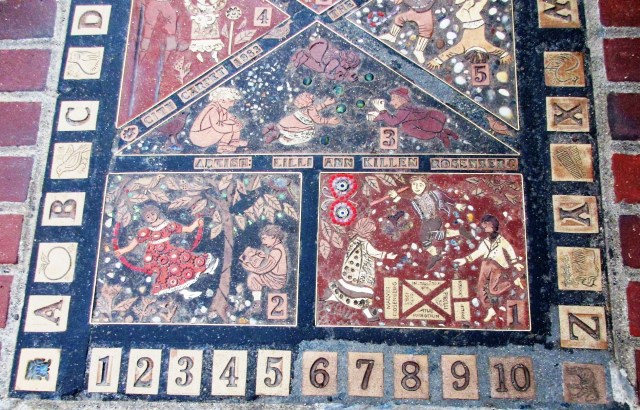
Lilli Ann Killen Rosenberg (1924–2011) initiated memorably collaborative community art projects wherever she went throughout her working life. From the Henry Street Settlement in New York City to numerous sites in the Boston area and then others in southern Oregon, she engaged children and adults in creating responsive public art. This post offers images from Boston sites I have visited and quotes or links that motivate me to visit many more.
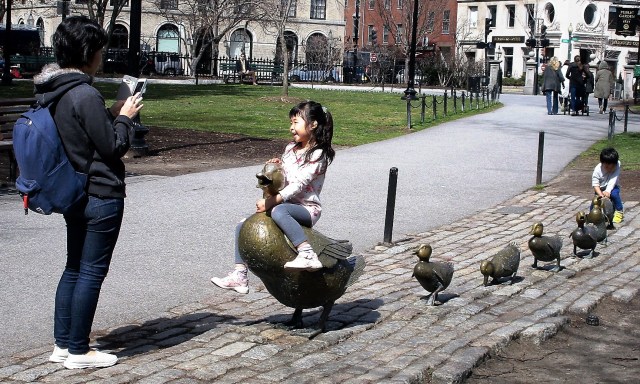
Making my way through the list of twenty-two women artists represented on Boston Public Art Walk, I’ve grown more aware of how pivotal Nancy Schön has been to my own interest in public art. …Through the years I’ve watched or joined with adults and children of all ages interacting happily with distinctive animal characters from Make Way for Ducklings written and illustrated by Robert McCloskey, published 1941.
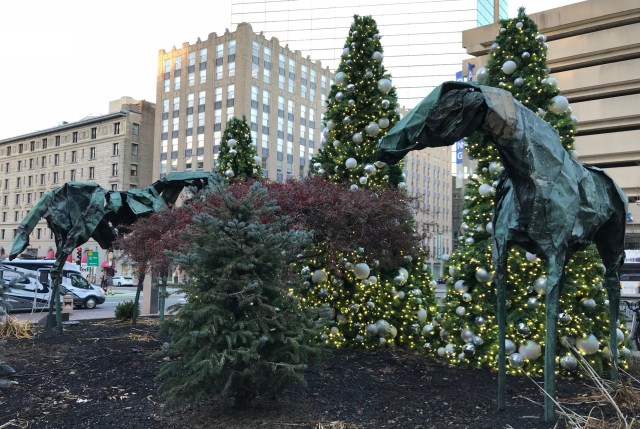
Deborah Butterfield is one of the twenty-two women artists represented on Public Art Walk Boston. Her sculpture “Henry and Paint” is situated outside Copley Place. Visiting Henry and Paint through successive seasons of 2017, I saw them as distinct individuals bonded by their survival of changed surroundings.
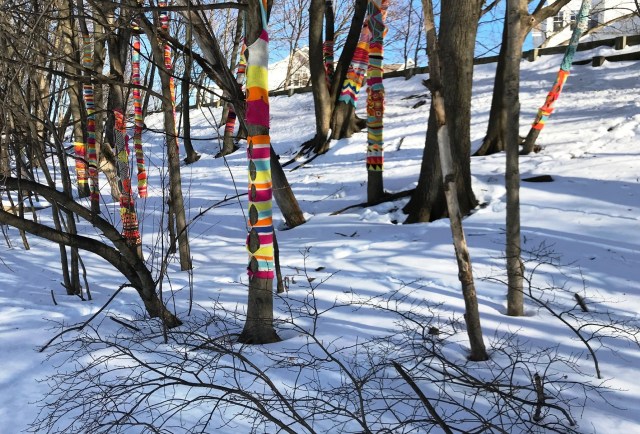
Temporary Art Takes in the Expected Effects of Time and Weather After posting about two temporary art installations, “Ripple” and “Current,” in early autumn, I planned to revisit them at least once each month to see how they would survive seasonal changes. I did not know then how compelling both would prove to be, far beyond just curiosity. […]
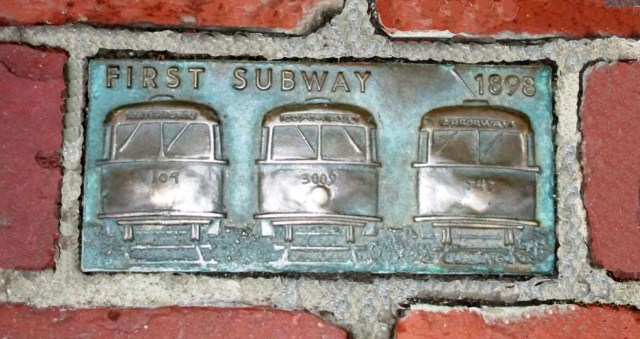
Yet again the goal to post about women artists with work on Boston Public Art Walk has led me to suddenly see what’s been in plain sight so long, in this case since 1985. That year Kate K. Burke and Gregg LeFevre inlaid more than one hundred bronze relief tablets throughout the brick walkway of one historic lane in downtown Boston.
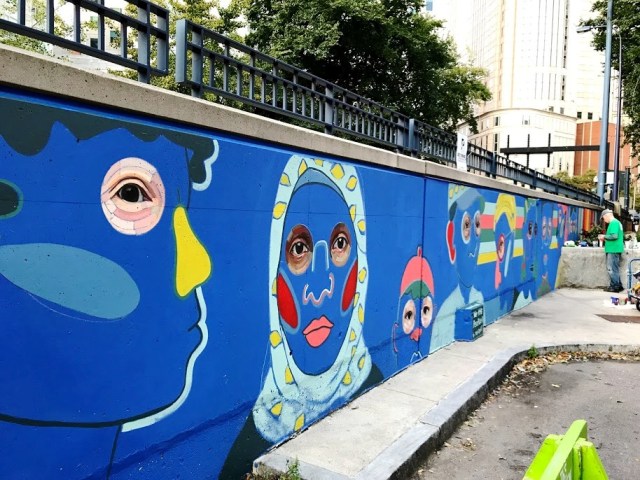
In October I had read about the Greenway mural in progress on the Lincoln Street Triangle. Fortunately, I got there while the artist Mia Carollo Cross and her father were about to finish up the month-long project in the last hour of good daylight! I spoke with Mia briefly about my interest in the process of creating murals and then began to photograph her, the materials, tools, and art.

If trees along the Minuteman Bikeway could talk, what would they say about the two most recent Arlington Public Art installations? I think they would say thank you for the respectful attention they’ve been given by artists Adria Arch (“Ripple”) and Frank Vasello (“Current”). As a person passing along the Bikeway, I truly thank both artists for engaging me with the enduring structures and distinct qualities among trees. At the same time, I relish the marvelous patterns created by human hands and minds. I want to look longer, return often, and urge others to visit these artworks too.
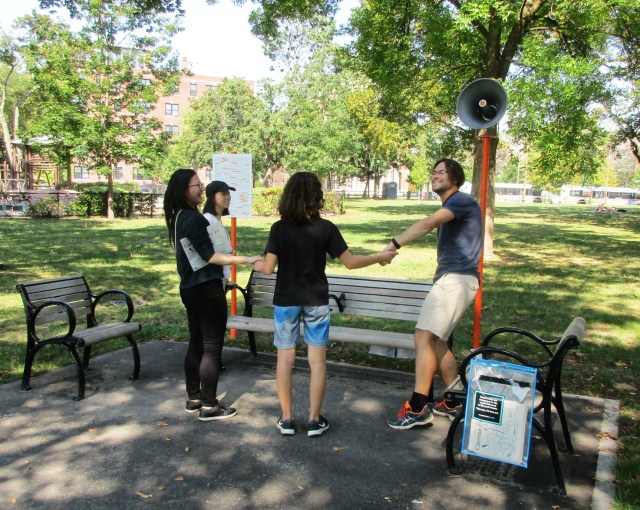
Cambridge Common seemed to me a public space of few surprises until a few months ago. Then suddenly it became a place to spark inspiring statements by holding hands, to select story performances from a food truck, to share the seat of a gigantic chair, and to join an eyes-closed tour led by a blind artist. Those were just some of the experiences offered through Common Exchange*, with ongoing installations and scheduled events from May through September 2017.
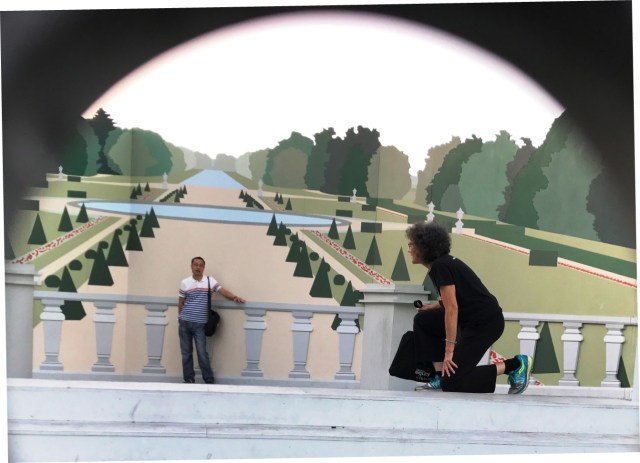
Enlightened and excited by both artists’ presentations on September 26, I ‘m posting quickly now, just in case you can plan to go before their temporary exhibits vanish October 7 (Reigelman) and October 8 (James). Later on, I hope to share our perspectives in the interactive spirit of these engaging forms of art outdoors.
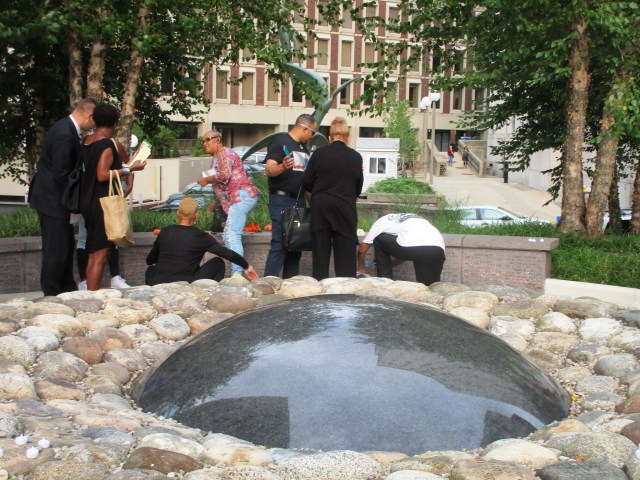
This post shares my impressions from the Thirteenth Annual Honor Program at the Garden of Peace: a Memorial to Victims of Homicide. It follows from a July post with background about the Garden and the two women artists, Judy Kensley McKie and Catherine Melina.


